 Fought today in the War of 1812.
American victory.
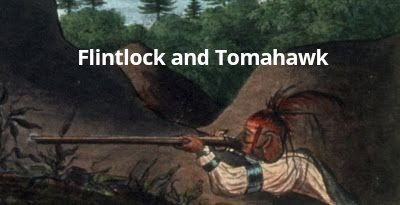
American warfare 1690-1835 in popular culture, art, in miniature and in wargames, through Living History and in movies.

Accounts indicate that the moment of contact was followed by a sharp battle lasting about forty-five minutes. An order to reposition the Patriot line turned into a frantic rout when the inexperienced Patriot militia panicked. This ended the battle and triggered the Iroquois hunt for survivors. Only sixty of the Americans managed to escape, and only five were taken prisoner. Some of the victorious Loyalists and Iroquois killed and tortured an unknown number of prisoners and fleeing soldiers. Butler reported that 227 American scalps were taken.[6]
Colonel Dennison surrendered Forty Fort and two other forts along with the remaining soldiers the next morning. The Americans were paroled with the condition that they not engage in hostilities for the remainder of the war. These soldiers were not harmed. Colonel Dennison and the militia did not honor the terms of their parole, and they were under arms within the year and later attacked Iroquois villages.
There was no substantial killing of non-combatants and almost no inhabitants were injured or molested after the surrender.[7] John Butler wrote : "But what gives me the sincerest satisfaction is that I can, with great truth, assure you that in the destruction of the settlement not a single person was hurt except such as were in arms, to these, in truth, the Indians gave no quarter."[8] An American farmer wrote: "Happily these fierce people, satisfied with the death of those who had opposed them in arms, treated the defenseless ones, the woman and children, with a degree of humanity almost hitherto unparalleled".[9]
According to one source, 60 bodies were found on the battlefield and another 36 were found on the line of retreat and all were buried in a common grave[4]. According to another source 73 bodies were also buried in one hole.[citation needed]
The Iroquois were enraged at the accusations of atrocities which they said they had not committed, as well as at the militia taking arms after being paroled. This would have tragic consequences at the Cherry Valley Massacre later that year.[10]
Below is a description from this site on Blue Jacket where there is a painting by Hal Sherman
THIS IS BLUE JACKET THROUGH THE EYES OF WHITE CAPTIVE O. M. SPENCER
JULY, 1792 AT THE HOME OF THE CHIEF ON THE MAUMEE
”His person, about six feet high was finely proportioned, stout, and muscular; his eyes large, bright, and piercing; his forehead high and broad; his nose aquiline; his mouth rather wide, and his countenance open and intelligent, expressive of firmness and decision .... He was dressed in a scarlet frock coat, richly laced with gold and confined around his waist with a part-colored sash, and in red leggings and moccasins ornamented in the highest style of Indian fashion. On his shoulders he wore a pair of gold epaulets, and on his arms broad silver bracelets; while from his neck hung a massive silver gorget and a large medallion of His Majesty, George Ill. Around his lodge were hugh rifles, war clubs, bows and arrows, and other implements of war; while the skins of deer, bear, panther, and otter, the spoils of the chase, furnished pouches for tobacco, or mats for seats and beds. His wife was a remarkably fine looking woman; his daughters, much fairer than the generality of Indian women, were quite handsome; and his two sons, about eighteen and twenty years old, educated by the British, were very intelligent”


