Relive the great attacks that marked the city: from William Phips' attempt to take Quebec in 1690 to the 1759-1760 siege, and the American invasion of 1775.This historical reconstruction event, presented this year under the theme of besieged Quebec, constitutes an important gathering of history specialists, animators and "reconstructors".On the agenda:
• Visit to a vintage camp• Meetings with costume rebooters• Shooting demonstrations• Exploring the Martello Tower•Discovering alliances with First Nations, life in war, famine, bombing, disease and winter survivalAn immersive, enriching and memorable experience to live with family or friends in the heart of Abraham's plains!Full details: https://bit.ly/41WBuWk.
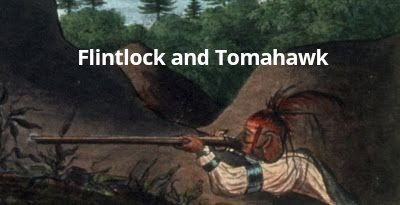
American warfare 1690-1835 in popular culture, art, in miniature and in wargames, through Living History and in movies.
Sunday, 31 August 2025
Battlefield - under siege Quebec


Friday, 29 August 2025
Newtown 1779
The Battle of Newtown (August 29, 1779) was the only major battle of the Sullivan Expedition, an armed offensive led by Major General John Sullivan that was ordered by George Washington to end the threat of the Iroquois who had sided with the British in the American Revolutionary War. Opposing Sullivan's four brigades were 250 Loyalist soldiers from Butler's Rangers, commanded by Major John Butler, and 350 Iroquois and Delaware (Lenape). Butler and Mohawk war leader Joseph Brant did not want to make a stand at Newtown, and instead proposed to harass the enemy on the march, but were overruled by Sayenqueraghta and other Indigenous war leaders.
This battle, which was the most significant military engagement of the campaign, took place at the foot of a hill along the Chemung River just outside what is now Elmira, New York.
More in depth here
Sunday, 24 August 2025
Wednesday, 20 August 2025
Tuesday, 19 August 2025
Battle of Blue Licks 1782
The last major battle of the Revolution. Fought today August 19. Daniel Boone lost his son in this action. Wiki It was the last victory for the Loyalists and natives during the frontier war. British, Loyalist and Native forces would engage in fighting with American forces once more the following month in Wheeling, West Virginia, during the Siege of Fort Henry.
 |
| The ambush - Battle of Blue Licks by Doug Hall |
Butler's Rangers & Indian Department |
Extract of a Letter from Capt. CALDWELL, dated at Wakitamiki August 26th, 1782— When I last had the pleasure of writing you I expected to have struck at Wheeling as I was on my march for that place, but was overtaken by a messenger from the Shawnese, who informed me the Enemy was on their march for their Country, which obliged me to turn their way, and to my great mortification found the Alarm false and that it was owing to a Gondalo coming up to the mouth of Licking Creek, and landing some men upon the South side of the Ohio, which when the Indians saw, supposed it must be Clark. It would have been a lucky circumstance if they had come on, as I had Eleven hundred Indians on the ground, and three hundred within a days march of me. When the Report was contradicted They mostly left us, many of them had left their Towns no ways equiped for War, as they expected as well as myself to fight in a few days, notwithstanding I was determined to pay the Enemy a visit with as many Indians as would follow me: accordingly I crossed the Ohio with three Hundred Indians and Rangers, and marched for Bryant’s Station on Kentuck, and surrounded the Fort the 15th in the morning, and tried to draw ‘em out by sending up a small Party to try to take a Prisoner and Shew themselves, but the Indians were in too great a hurry and the whole shewed to[o] soon. I then saw it was in vain to wait any longer and so drew nigh the Fort, burn’t 3 Houses which was part of the Fort but the Wind being contrary prevented it having the desired effect, kill’d upwards of 300 Hogs, 150 head of Cattle, and a number of Sheep, took a number of Horses, pull’d up and destroyed their Potatoes, cut down a great deal of their Corn, burn’t their Hemp and did other considerable damage— by the Indians exposing themselves too much we had 5 Killed and 2 wounded. We retreated the 16th and came as far as Riddle’s former Station, when nigh 100 Indians left me, as they went after their things they left at the Forks of Licking, and I took the Road by the blue Licks as it was nigher and the ground more advantageous in case the Enemy should pursue us — got to the Licks on the 17th and encamped. On the 18th in the morning, one of my Party that was watching the Road came in and told me the Enemy was within a mile of us, upon which I drew up to fight them — at ½ past seven they advanced in three Divisions in good order, they had spied some of us and it was the very place they expected to overtake us. We had but fired one Gun ‘till they gave us a Volley and stood to it very well for some time, ‘till we rushed in upon them, when they broke immediately. We pursued for about two miles, and as the Enemy was mostly on horseback, it was in vain to follow further. We killed and took One hundred and Forty six, amongst the killed is Col. Todd the Commandr., Col. Boon, Lt. Col. Trigg, Major Harlin who commanded their Infantry, Major Megara, and a number more of their Officers. Our loss is Monsr. LA BUTE killed; he died like a Warrior fighting Arm to Arm, six Indians killed and ten wounded. The Indians behaved extremely well, and no People could behave better than both Officers and Men in general. The Indians I had with me were the Wyandots and Lake Indians. The Wyandots furnished me with what Provision I wanted, and behaved extremely well. |
Saturday, 16 August 2025
Bennington 1777
Today's anniversary. Wiki
The Battle of Bennington was a battle of the American Revolutionary War, part of the Saratoga campaign, that took place on August 16, 1777, on the John Green farm in Walloomsac, New York, about 10 miles (16 km) from its namesake, Bennington, Vermont. An American force of 2,000 men, primarily New Hampshire and Massachusetts militiamen, led by General John Stark, and reinforced by militiamen from the independent Vermont Republic led by Colonel Seth Warner and members of the Green Mountain Boys, decisively defeated a detachment of General John Burgoyne's army led by Lieutenant-Colonel Friedrich Baum, and supported by additional troops under Lieutenant-Colonel Heinrich von Breymann.
Baum's detachment of 700 men consisted of Hessian and British Army troops, Canadian and Loyalist irregulars and a number of Iroquois warriors.[8] He was sent by Burgoyne to raid Bennington in the disputed New Hampshire Grants area for horses, draft animals, provisions, and other supplies. Believing the town to be only lightly defended, Burgoyne and Baum were unaware that Stark and 1,500 American militiamen were stationed there. After a rain-caused standoff, Stark's men enveloped Baum's position, taking many prisoners, and killing Baum. Reinforcements for both sides arrived as Stark and his men were mopping up, and the battle restarted, with Warner and Stark driving away Breymann's reinforcements with heavy casualties.
Friday, 15 August 2025
Battle of Fort Oswego

The Battle of Fort Oswego was one in a series of early French victories in the North American theatre of the Seven Years' War won in spite of New France's military vulnerability. During the week of August 10, 1756, a force of regulars and Canadian militia under General Montcalm captured and occupied the British fortifications at Fort Oswego, located at the site of present-day Oswego, New York.
In addition to 1,700 prisoners, Montcalm's force seized the fort's 121 cannons. The fall of Fort Oswego effectively interrupted the British presence on Lake Ontario and removed it as a threat to the nearby French-controlled Fort Frontenac. The battle was notable for demonstrating that traditional European siege tactics were viable in North America when applied properly in the right circumstances and terrain.
Subscribe to:
Posts (Atom)
Across the Ocean, Into Battle: German Soldiers, Families, and Communities in the American Revolution
Historian Friederike Baer focuses our attention on the varied experiences of the German auxiliaries in the American Revolution. Between 17...

-
 From Don's Facebook page. The incident depicts Two Kettles Together loading a musket for her wounded husband Honyere Tehawenkarogwen ...
 -
Across the Ocean, Into Battle: German Soldiers, Families, and Communities in the American RevolutionHistorian Friederike Baer focuses our attention on the varied experiences of the German auxiliaries in the American Revolution. Between 17...

