The power of the French fleet was broken, and would not recover before the war was over; in the words of Alfred Thayer Mahan (The Influence of Sea Power upon History), "The battle of 20 November 1759 was the Trafalgar of this war, and [...] the English fleets were now free to act against the colonies of France, and later of Spain, on a grander scale than ever before". For instance, the French could not follow up their victory at the Battle of Sainte-Foy in 1760 for want of reinforcements and supplies from France and so Quiberon Bay may be regarded as the battle that determined the fate of New France and hence Canada.
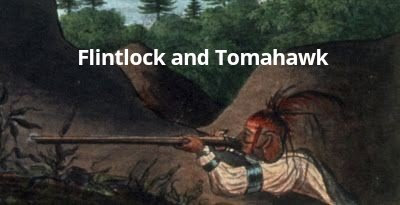
American warfare 1690-1835 in popular culture, art, in miniature and in wargames, through Living History and in movies.

Subscribe to:
Post Comments (Atom)
The Last of the Mohicans; A narrative of 1757 by James Fenimore Cooper
The Last of the Mohicans; A narrative of 1757 by James Fenimore Cooper | Project Gutenberg It was published in 1826 so I thought we could ...

-
 From Don's Facebook page. The incident depicts Two Kettles Together loading a musket for her wounded husband Honyere Tehawenkarogwen ...
-
Across the Ocean, Into Battle: German Soldiers, Families, and Communities in the American RevolutionHistorian Friederike Baer focuses our attention on the varied experiences of the German auxiliaries in the American Revolution. Between 17...


No comments:
Post a Comment